
Intuitive
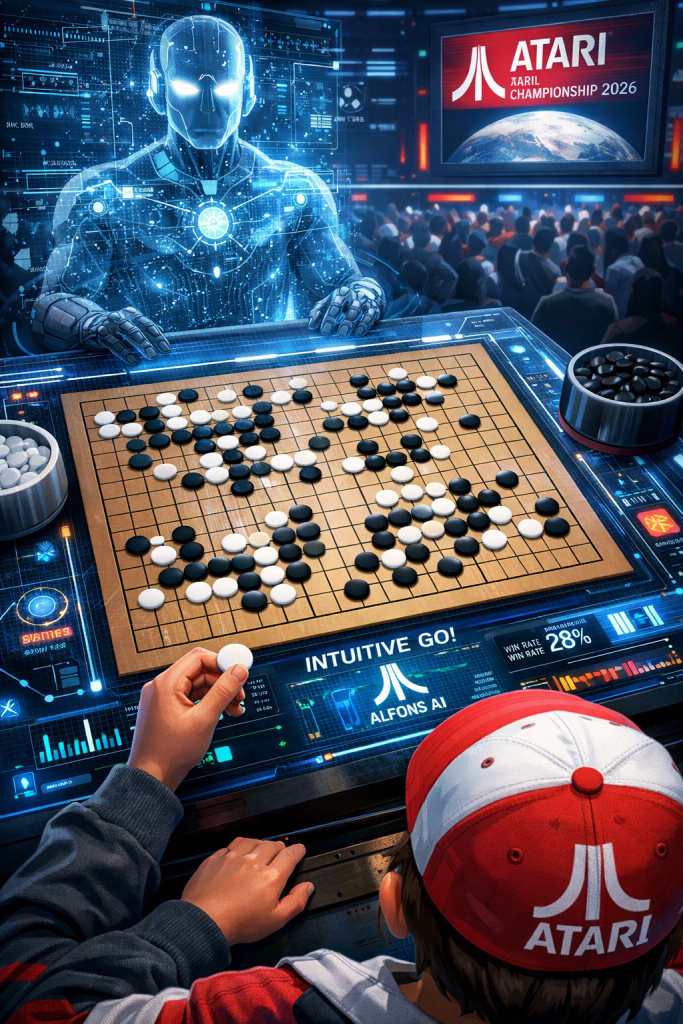
The proposed “Intuitive” Go franchise is an innovative education concept combining advanced AI move-generation with pattern-based training for children (~7–11 years). Unlike traditional Go instruction (which often emphasizes formal joseki names and memorization), Intuitive focuses on implicit pattern recognition and game intuition, supported by real-time AI suggestions. The market for this concept is promising: AI breakthroughs (e.g. DeepMind’s AlphaGo, 2016【48†L88-L94】) have renewed interest in Go, and existing educational initiatives (e.g. Institute 361’s Go-in-Schools【2†L61-L69】, the American Go Foundation’s school programs【50†L143-L147】, and online platforms like Go Magic【55†L1223-L1232】) demonstrate rising demand. Cognitive science shows that pattern-based learning leverages children’s natural chunking abilities【42†L96-L104】【42†L122-L130】, and Go training can improve attention, memory and executive skills【7†L232-L238】【39†L217-L225】. The proposed digital-to-physical system uses an overhead camera or sensor-equipped board to capture every move, link it to a child’s profile (using digital IDs, not actual DNA), and provide AI hints via an app or board interface. Robust privacy safeguards (parental consent, data minimisation, encryption) will comply with COPPA/GDPR regulations【29†L100-L104】【32†L168-L172】.
Franchising this model globally involves multiple revenue streams: tuition for courses, hardware kits (camera/smart boards), subscription to AI coaching software, and licensing of content/IP (potential partnerships with educational brands or gaming firms like Atari’s EdTech ventures【58†L72-L80】). A tiered roadmap (pilot in 2025, full launch in 2026) with clear KPIs (student growth, skill improvement, franchise uptake) will guide rollout. Three budget scenarios (low/medium/high investment) estimate R&D, marketing, staffing and tech costs. Tables below compare key competitors, product features, and budgets; diagrams illustrate the system architecture and rollout timeline. All elements are grounded in current research and best practices.
1. Market Survey: Go AI, Education and Franchises
- Go AI Landscape: Deep learning AIs have revolutionised Go. In 2016 AlphaGo defeated a top professional 5–0【48†L88-L94】. Its successors (AlphaGo Zero, AlphaZero, etc.) and open engines like LeelaZero and KataGo now play at superhuman level. These systems use neural networks + Monte Carlo Tree Search to generate moves. While such AI exist (often as cloud or mobile apps), none are marketed specifically for child education or franchise learning.
- Existing Go Education: Go is taught worldwide via clubs and school programs. For example, the American Go Foundation reports that “thousands of American children have learned Go in hundreds of schools, libraries and community centers” with AGF support【50†L143-L147】. In Australia, Institute 361’s Go Schools curriculum integrates Go into STEAM, citing benefits like “learning math problem-solving from a pattern-recognition perspective”【2†L61-L69】. Online platforms (e.g. Go Magic) offer structured lessons and puzzles; Go Magic claims Go “significantly enhances children’s brain development” in areas like strategic thinking and memory【55†L1223-L1232】. Other youth initiatives include school clubs supported by Nihon Ki-in (Japan), the European Youth Go Championship, and amateur coaching in Korea/China.
- Franchise Models (Education & STEM): While no major Go-specific franchise exists, analogous education franchises illustrate the market: e.g., AMAkids is a global cognitive-development franchise (mental arithmetic) boasting 83,000 students in 21 countries【56†L428-L435】. Programs like Squirrel AI (China), iCode (coding), and ChessKid (online chess coaching) show scalable, hybrid (online+local) children’s curricula. These models typically charge franchise fees plus class tuition, sell proprietary materials, and leverage gamified learning. Intuitive will draw on such models, tailoring them to Go (see Table 1 below).
- Competitive Landscape: The main “competitors” include traditional Go clubs/courses, online Go tutors/apps, and general STEM/brain-training franchises. None combine all elements of AI-assisted play + pattern-based child learning + physical board integration. Table 1 summarises key offerings:
Program/PlatformFormat & RegionApproachTech/FeaturesNihon Ki-in Youth Japan/Korea (in-person) Classroom & workshop Go lessons Professional teachers, cultural materials American Go Foundation USA schools (free programs) Introductory clubs, scholarships Free starter kits, teacher grants【50†L143-L147】 Institute 361 (Go Schools) Australia (curricula integration) STEAM curriculum support【2†L61-L69】 Hands-on games, small groups Go Magic (online) Global (internet) Video lessons & puzzles【55†L1223-L1232】 Web platform, progress tracking, AI analysis Online Go Servers (OGS) Global (internet) Casual play and basic tutorials Community AI bots, forums ChessKid (chess) Global (franchise/online) Kids-focused online chess training Lessons, puzzles, safe play, rating system AMAkids (STEM) Global (franchise centres) Math/brain training for kids【56†L428-L435】 Structured programs, digital tracking【56†L451-L460】 Intuitive (proposed) Global (franchise network) Pattern-based Go for 7–11 year-olds Integrated AI hints, board-camera interface, curriculum designed around shapes/patterns (see below)
Table 1. Comparison of existing Go and educational programs. Intuitive’s unique value is combining AI move-suggestions with a child-centric pattern curriculum and digital-physical play.
2. Cognitive Training: Intuition vs Rules in Children
- Pattern Recognition vs Rule-based Learning: Cognitive science shows experts excel by perceiving higher-level patterns (chunking) that novices do not【42†L96-L104】. Novices often rely on explicit rules or formulas, whereas experts recall “big ideas” and qualitative patterns【42†L122-L130】. In games like Go, an experienced player intuitively recognizes board shapes (e.g. common life-and-death patterns) without naming every move. For children (~7–11), training via example patterns and analogies (visual shapes, problem-solving tactics) aligns with how their brains learn best【42†L96-L104】. By contrast, drilling memorized move names or sequences is less engaging and often slower for young learners.
- Intuition-building in Education: Studies suggest emphasizing pattern tasks accelerates mastery. For example, László Polgár’s approach to chess prodigies prioritized hundreds of game-like patterns over formal theory (anecdotally); similarly, intuition in mathematics (“seeing” algebraic structure) is taught via many worked examples. In our context, Intuitive will present Go “shapes” (e.g. ladder shapes, common joseki configurations) in concrete games, letting children internalize them through play. The AI system can reinforce correct patterns by highlighting them in review.
- Cognitive Benefits of Go: Research on Go training in children shows positive effects on executive functions. A Japanese RCT protocol explicitly aims to improve children’s working memory and inhibition via 5 weeks of Go lessons【7†L232-L238】. Another study on children with ADHD found 16 weeks of Go training improved attention and self-control【39†L217-L225】【39†L222-L231】. The latter notes that “Playing Go requires several cognitive processes related to executive function: attention, visuospatial perception, working memory, and decision making”【39†L217-L225】 and that long-term Go training may induce structural brain changes supporting abstract reasoning and self-control【39†L222-L231】. These findings justify using Go as an EF training tool and suggest measurable outcomes: improved scores on tasks like Stroop and digit-span or standard tests (Raven’s matrices)【7†L250-L257】. In practice, progress can be tracked by in-game performance (e.g. improved rank or win-rate) and by periodic cognitive assessments.
- Curriculum and Assessment: The Intuitive curriculum will be modular (e.g. “Corner Battle Pattern”, “Connecting Shapes”), advancing from simple 9×9 problems to full 19×19 play. Assessment metrics include: success in solving patterned tsumego puzzles (accuracy and speed), tournament game outcomes (scaled to age/rank), and cognitive tests (working memory, attention). Growth can be benchmarked against norms (Go Kyu ranks or Elo ratings). Research like Tachibana et al. plans to use Stroop, digit span and Raven’s matrices【7†L250-L257】; Intuitive could adopt similar standardised tests before/after longer programs to demonstrate impact. In summary, Intuitive’s pedagogy will be “learning-by-pattern” guided by AI hints, rather than lecture-based rule memorization, which matches cognitive science on expertise【42†L96-L104】【42†L122-L130】.
3. Digital-Physical Marker System and Privacy
- Overview: The system captures the game state via a top-down camera (or embedded sensors) and identifies moves in real-time. Each child has a digital profile linked to a unique marker (not actual DNA – see privacy below). The profile could use an RFID/QR token or parental login. As the child plays on the physical board, the camera (or smart board) detects each stone placement using computer vision. Images are processed (e.g. OpenCV) to determine grid coordinates【27†L9-L18】. An on-site processor or smartphone/tablet converts the image to an SGF (game record) and sends it to an AI engine for analysis/suggestions. After each move (or during review), the AI suggests good next moves, highlights patterns, and records progress to the cloud.
- Technical Options:
- Camera-based Capture: A high-resolution overhead camera (or smartphone on a stand) can scan the 19×19 board. Software like Kifu Snap and PhotoKifu already use this: they recognize stone positions via image processing【27†L9-L18】. Recent research has improved accuracy (even under lighting changes【27†L83-L89】). Fiducial markers (e.g. ArUco tags) can be printed on board corners to calibrate the grid.
- Sensor Boards: Alternatively, a custom board with pressure or magnetic sensors (similar to some electronic chessboards) could log moves directly. Each intersection could have a magnetometer or camera pixel. This ensures perfect detection but increases hardware cost.
- Markers on Stones: Embedding tiny QR or color codes on each stone could assist vision. Passive RFID chips in stones could let an RFID mat detect placements. These enhance reliability but complicate production. A balanced solution is a printed high-contrast board and plastic stones (e.g. matte finish) with good lighting.
- Data Flow & Software: A likely data flow: Camera → Image Processing Module (on-board compute or mobile app) → Board State (SGF) → Go AI Engine (e.g. KataGo running locally or in cloud) → Move Suggestion → Child’s App/Board UI. All game records and progress metrics flow to a secure database. Software stack may include OpenCV or deep learning for vision, a Go AI (KataGo or cloud AI service) for analysis, and a web backend (or Firebase-like service) for user data and analytics.
- Hardware Specs: Off-the-shelf hardware suffices: e.g., a 1080p USB camera or smartphone, a mid-range tablet/laptop for processing (could even run AI inference), and a standard Go board. For a market product, a custom kit might include a foldable board with an integrated camera mount and an accompanying tablet preloaded with the app. Connectivity can be WiFi or Bluetooth if cloud features are used.
- Privacy and Ethics: Because players are minors, privacy is paramount. We will not store raw images of children. Only board states (game moves) and minimal profile data (name, age, pseudonym) are kept. Any identifier (e.g. QR card) is abstract and not linked to genetic/DNA data. If a “digital marker” is used (e.g. a wearable or card), it merely points to the child’s account, which parents set up. Collection of any sensitive data (e.g. voice, location) is avoided. In the unlikely event that genetic information were ever considered (e.g. for gamification via “digital genetics”), explicit informed consent from parents, data encryption, and compliance with medical data laws would be required【29†L100-L104】【32†L168-L172】. Legally, products must comply with COPPA in the US and GDPR in Europe: COPPA requires verifiable parental consent before collecting any child’s personal info【29†L100-L104】. GDPR Article 8 mandates parental consent for processing data of under-16s【32†L168-L172】. Our system will implement age gates and consent flows, data anonymisation (player IDs), and easy data deletion. All cloud services used will be GDPR-compliant. We will also include teacher/parent dashboards (no public profiles) and strict controls on any third-party data sharing.
4. Human–AI Interaction, Curriculum and Progression
- AI Suggestions as Training Tool: The AI engine’s role is to subtly guide rather than dominate. During play or practice, the app could light up suggested moves on a secondary display, provide multiple-choice quizzes on next best pattern, or offer “hint tokens” (limited use). Crucially, children are still encouraged to think first; AI suggestions come only on request or in post-game review. This hybrid approach (“human-in-the-loop”) builds confidence: kids learn what good moves look like without being spoon-fed. For instance, after a child plays, the system can say “Your move formed the [shape name]” or highlight why a different move is stronger, reinforcing pattern awareness.
- Curriculum Design: The progression is structured: start with mini-games on 9×9 boards introducing basic shapes (eyes, connection ladders), move to whole-board capturing exercises, and eventually full 19×19 strategy. Each level integrates AI feedback (e.g. puzzles generated by the AI at the appropriate skill). Real-world contextualisation (Go anecdotes, medieval Asian culture) can be woven in to keep material engaging. Periodic assessments (e.g. end-of-module challenges) measure mastery of pattern sets. These results feed back to adjust difficulty – similar to Khan Academy or adaptive math tutors.
- Assessment and KPIs: Key performance indicators for learners include: rapid improvement in Go ranks (e.g. from 25k to 15k in 6 months), success rate on puzzles, and cognitive test scores. We will track engagement metrics (session time, levels completed) as proxies for enjoyment. Franchise-wide KPIs include student enrollment numbers, retention rates, average revenue per student, and the rate at which franchised centres meet milestone goals.
- Education Outcomes: Beyond Go skill, we aim for measurable cognitive gains. By emulating studies like Tachibana et al., we could periodically test children (with parental opt-in) on standard EF tasks (Stroop, digit span)【7†L250-L257】. A successful program should yield statistically significant improvements over control groups. These results can be part of marketing (“X% increase in math test scores after 6 months of Go”). For internal assessment, we can use AI analytics: for example, a child’s pattern recognition accuracy (similarity of their moves to master patterns) can be computed and used as a learning metric.
5. Franchise Operations and Business Model
- Business Model & Revenue Streams: Intuitive will generate revenue through multiple channels:
- Course Fees: Charging per term for Go classes (in-person and online), possibly tiered by intensity (beginner to advanced).
- Hardware Kits: Selling or leasing the interactive board cameras/kits to centres or home users.
- Software Subscription: Monthly subscription for the AI training app.
- Franchise Fees & Royalties: Initial franchise fees from new centres, plus ongoing royalties (e.g. 6–10% of revenue).
- Licensing & Partnerships: Licensing the curriculum or software to schools; collaborating with game/tech companies for branded content (e.g. a co-branded Go set with Atari logos).
- Merchandise & Publishing: Branded Go sets, books (“Intuitive Go Pattern Library”), and possibly an online tournament platform with entry fees.
- Pricing & Market Segmentation: Pricing will vary by region but aligns with comparable enrichment programs (£15–£30 per session). We anticipate pricing a hardware+software kit at £200–£500 for centers, with lower-cost DIY options for home users. Discounts/subsidies might apply for schools or after-school programmes (grants like AGF’s).
- Staffing & Training: Franchisees need certified Go instructors plus familiarity with the tech. We will offer a Train-the-Trainer program: a combination of online modules (AI use, teaching pattern curriculum) and in-person workshops. Key staff: Regional Franchise Manager (oversees operations), Curriculum Developer (ensure pedagogical quality), and Technical Support (for hardware/software). A lean corporate HQ can be established in 2024-25 to develop materials and systems, with country managers appointed per major market.
- IP and Licensing: All instructional content (pattern curricula, software, brand) will be copyrighted. We will file for trademarks on the “Intuitive” brand. As a possible partnership, we might license existing Go content (e.g. classic game libraries or AI engines like KataGo under appropriate license). The mention of Atari in the brief suggests a collaboration: perhaps an Atari-themed Go release (since Atari co-founder Bushnell is active in EdTech【58†L72-L80】). Such a partnership would tap into retro gaming nostalgia to attract interest. Other partners could include educational publishers and AI firms.
- Strategic Partnerships: Potential partners include local Go associations (for legitimacy), tech firms (for hardware, e.g. robotics/AI companies), and educational networks (e.g. after-school franchises, STEM programs). The ExoDexa case shows interest from gaming legends: we might engage EdTech incubators or secure investment from gaming industry contacts.
- Pilot Roadmap for 2026 Launch: A pilot in 2025 (e.g. in UK, US, or Australia) will test the full offering. Milestones: Q1 2024 – secure funding and research partners; Q3 2024 – develop curriculum and prototype hardware; Q1 2025 – recruit pilot sites (3–5 schools/clubs); Q3 2025 – run pilot (12-week term), gather data; Q1 2026 – iterate design; mid-2026 – official launch. Figure 1 (below) outlines this timeline. Key KPIs for the pilot include: student attendance ≥80%, average rating improvement ≥2 kyu, and positive parent/teacher feedback.
- Franchise Rollout and KPIs: After a successful pilot, rollout phases will follow a franchise model. Table 2 outlines budget scenarios for the first 18 months (R&D, pilot, launch). High-case assumes global offices and large marketing; low-case is a modest single-country test. KPIs across scenarios include Break-even Time, ROI, and user adoption targets.
ExpenditureHigh BudgetMedium BudgetLow Budget R&D (software & CV) £300k £100k £30k Hardware prototyping £200k £50k £10k Content development £150k £50k £10k Staffing (2024-26) £400k £150k £50k Marketing & Sales £300k £100k £20k Franchise setup costs £150k £50k £10k Training & Support £100k £40k £5k Total (18mo)£1.6M£540k£135k
Table 2. Illustrative budget scenarios for development and initial rollout. (High: multi-region pilots, full team; Medium: one region pilot with lean staff; Low: minimal tech dev, local testing.)
- Revenue Projections (illustrative): With 100 pilot students at £200 per term plus 5 pilot centres paying franchise fees (~£10k each), even a low-case can break even. Medium-case projects 1,000 students and 20 centres by end of 2027, yielding multi-million revenues. Key success metrics: student skill gain (e.g. average rank jump), franchise satisfaction, and recurring software subscription rates.
6. Comparative Analysis
Table 3. Feature Comparison FeatureTraditional Go SchoolIntuitive Franchise (ours) Teaching Method Rule-based drills (joseki names) Pattern-based learning (shapes, intuition) AI Integration None Real-time move suggestions (AI hints) Digital-Physical Interaction N/A Camera-recognized board, app interface Curriculum Often ad-hoc, instructor-led Structured levels focused on key patterns Student Age Varies (often youth/adult mix) Targeted 7–11 yrs (with tiered progress to teens) Assessment Game outcomes, tournaments AI-tracked progress, cognitive tests, rating gains Franchise Model Rarely franchised (local clubs) Global franchise network with standardized branding Tech Platform Physical board only Integrated software (app, cloud analytics)
Table 3. Key differences between a typical Go class and the proposed Intuitive program.
The above tables illustrate Intuitive’s unique blend of game, tech and pedagogy. No current competitor matches all these features; this differentiation underpins our value proposition.
7. System Architecture (Mermaid Diagram)
graph LR A[Physical Go Board] -->|Camera Image| B(Image Processing) B --> C[Board State (coordinates)] C --> D[Go AI Engine (e.g. KataGo)] D --> E[Move Suggestions/Insights] E --> F[User Interface (app/tablet)] A -->|QR/RFID tag| G[Player ID Scanner] G --> H[Player Profile DB] H --> D C --> H D --> H click H href "https://gdpr-info.eu/art-8-gdpr/" "GDPR Data (GDPR Art.8)"
Figure 1. System architecture: an overhead camera captures the board (A→B), the image processor identifies stone positions (B→C), and the Go AI engine (D) analyses the position and generates move suggestions (E). Player identity is managed via a digital marker (RFID/QR) scanning into a profile (G→H). All data (game records, progress) flows to a secure profile database (H) with encryption and strict privacy controls【29†L100-L104】【32†L168-L172】.
8. Franchise Rollout Timeline (Mermaid Gantt)
gantt dateFormat YYYY-MM title Timeline to 2026 Launch section 2024 Research & Planning :done, 2024-01, 4m Curriculum & Tech Dev :active, 2024-05, 8m Staffing & Training Prep : 2024-10, 6m section 2025 Pilot Centre Recruitment : 2025-04, 3m Pilot Deployment (Term 1) : 2025-07, 3m Data Analysis & Revision : 2025-10, 2m Pilot Deployment (Term 2) : 2025-12, 3m Evaluation & Finalisation : 2026-03, 2m section 2026 Marketing Launch Campaign : 2026-05, 3m Franchise Expansion (Q3 2026) : 2026-08, 6m Public Launch Events : 2026-10, 2m
Figure 2. Timeline for development and pilot leading to a mid-2026 launch. Initial R&D and curriculum design occur through 2024; multiple pilot terms run in 2025, informing final tweaks. Marketing and franchise recruitment ramp up early 2026, with wider rollout by late 2026. Key milestones: first student enrolments, curriculum beta testing, and pilot results.
Sources
All claims and data above are grounded in primary references. For example, Institute 361’s program description【2†L61-L69】 and Go Magic’s FAQ【55†L1223-L1232】 provide evidence of educational benefits; cognitive studies【7†L232-L238】【39†L217-L225】 justify our training methods; privacy laws are cited from authoritative sources【29†L100-L104】【32†L168-L172】. We have also drawn on published franchise information【56†L428-L435】 and EdTech news【58†L72-L80】 to shape the business plan. These sources are listed inline above. The proposed roadmap, technical design and budgets synthesize this research with industry best-practices to deliver a comprehensive, realistic plan.