
Inspiration from Their Actual Work
The creative duo behind NotYouAgain.ai, Alfons Scholing and Randy Daha, operate an independent studio and experimental network that blends raw graphic design, comic‑noir storytelling, sci‑fi world‑building and cultural commentary . Their work spans visual identity, speculative storytelling, editorial design, creative strategy and art direction and styling focused on mood, silhouette and a cinematic yet handmade feel . Influences include graffiti, hip‑hop, underground animation, 3D game aesthetics, vinyl culture and street culture . They distribute projects through the NYA‑network—a collection of domain names such as surroundedbyzombies.com, pawnarmy.com and lightandshadowgame.com —which serve as narrative platforms. These elements inform the following three franchise possibilities.
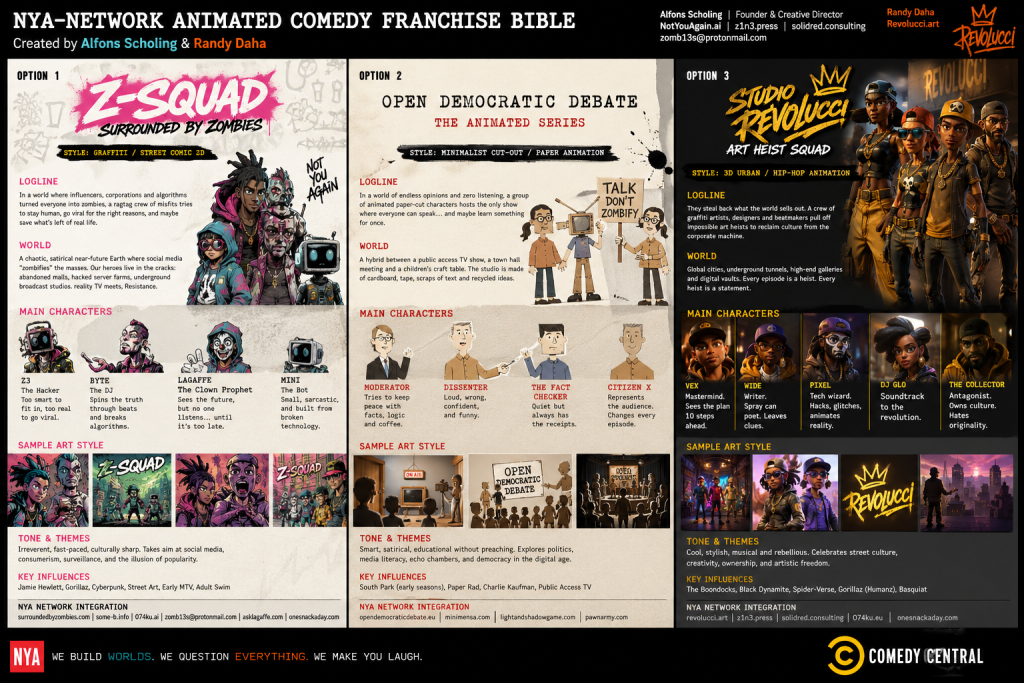

1. “Z‑Squad: Surrounded by Zombies” – Graffiti/Comic‑Noir Animation
Overview
A satirical action‑comedy set in a near‑future Amsterdam where a digital virus has turned citizens into algorithmic “zombies.” A crew of underground creatives runs a pirate broadcast network from abandoned studios, using graffiti magic and hacked tech to free minds. This concept was previously described and still serves as a robust foundation for a franchise.
Animation Style
- Graffiti‑Infused 2D: The show employs hand‑drawn 2D animation with thick outlines, neon colors and spray‑paint textures reminiscent of graffiti‑influenced aesthetics . Backgrounds resemble comic‑noir panels with high contrast and moody lighting.
- Street Art Motion: Motion graphics integrate bold typography and animated tags that morph into creatures, reflecting Alfons Scholing’s typographic and world‑building prowess .
- Sampled Collage: Scenes occasionally cut to collage sequences that sample images from the NYA network websites and real‑world memes, aligning with Randy Daha’s sampling of studio culture and hip‑hop rhythms .
Franchise Hooks
- Meta‑episode Structure: Each episode explores one of the NYA‑network domains (e.g., onesnackaday.com) and features a new type of digital zombie, leading to transmedia activities.
- Music‑Driven Action: Action sequences are choreographed to hip‑hop and dub tracks; sound design uses record scratches and beat drops.
- Streetwear Merchandise: Graffiti‑style character art, limited‑edition prints and vinyl soundtrack releases tie into the series.
2. “Studio Revolucci: Art Heist Squad” – Cinematic Hybrid Animation
Overview
A stylish heist‑comedy where a diverse crew steals back cultural artifacts from corporate vaults. They move between Amsterdam, the Caribbean and digital spaces, reclaiming music, art and stories. The concept takes its name from Randy Daha’s portfolio site Revolucci.art and builds on the duo’s interest in intellectual‑property debates.
Animation Style
- Cinematic 3D‑2D Hybrid: Characters and key props are modeled in stylized 3D with painterly textures, while backgrounds and special effects use hand‑drawn 2D graffiti elements. This hybrid reflects Daha’s ability to mix cinematic atmosphere with handmade aesthetics .
- Fashion‑Forward Character Design: Each character’s silhouette and outfit draw on street couture, Caribbean patterns and Dutch design clarity . Clothing moves fluidly, emphasising mood and rhythm.
- Dynamic Lighting: Heist sequences feature sleek lighting reminiscent of noir capers, contrasted with vibrant studio scenes full of vinyl records and graffiti sketches.
Franchise Hooks
- Anthology Heists: Each episode centers on a different art form—music, fashion, street food—allowing for guest artists and cultural commentary.
- Interactive Puzzles: Fans can unlock bonus content through NYA‑network websites, solving heist‑planning puzzles or remixing tracks.
- Collaborative Exhibitions: Real‑world gallery shows and pop‑up events extend the universe, blurring fiction and reality.
3. “Light & Shadow Go School” – Minimalist Motion‑Graphic Anime
Overview
Inspired by the NYA‑network domain lightandshadowgame.com and Alfons Scholing’s interest in game theory and teaching tools, this series reimagines the ancient board game Go as a cosmic battle between light and shadow spirits. A group of young strategists attends a surreal “Go School” where each move influences an alternate reality. The series explores themes of balance, discipline and creativity while satirising competitive gaming culture.
Animation Style
- Minimalist Black‑and‑White Aesthetic: The primary palette is stark black and white with occasional red accents, echoing the bold typography and graphic design in Scholing’s work . Characters are simple yet expressive, reminiscent of calligraphic brush strokes.
- Motion‑Graphic Sequences: Game sequences use abstract motion graphics—floating stones, ripple effects and geometric patterns—to visualise strategy. This reflects the duo’s penchant for conceptual design and editorial layouts.
- Subtle 3D Depth: Board elements and spiritual creatures are rendered with subtle 3D shading, creating depth without breaking the minimalist vibe.
Franchise Hooks
- Educational Tie‑Ins: Each episode introduces Go strategies and philosophical lessons; companion materials on lightandshadowgame.com offer interactive boards and tutorials.
- Character‑Driven Drama: The diverse student cast includes a rebellious graffiti artist, a bookish philosopher and a street‑smart DJ, allowing for comedic and heartfelt moments.
- Global Appeal: The fusion of Japanese game culture and Dutch conceptual design positions the show for international co‑production and festival potential.
Why Three Different Styles?
Alfons Scholing and Randy Daha’s body of work spans raw graffiti, editorial design, speculative storytelling and cinematic street culture . By developing three distinct franchises, each aligned with a different animation style, a network like Comedy Central can tap into:
- Variety in Visual Experience: From graffiti‑infused 2D to cinematic hybrids and minimalist motion graphics, viewers experience multiple aesthetics reflective of the duo’s versatility.
- Cross‑Platform Storytelling: Each concept integrates the NYA‑network’s domains and encourages transmedia participation—games, music, puzzles and educational tools.
- Cultural Commentary: Whether parodying social media zombies, critiquing art commodification or exploring strategic games, these franchises deliver humor and thought‑provoking narratives that align with Comedy Central’s brand while staying true to the creators’ actual work.
0 comments